

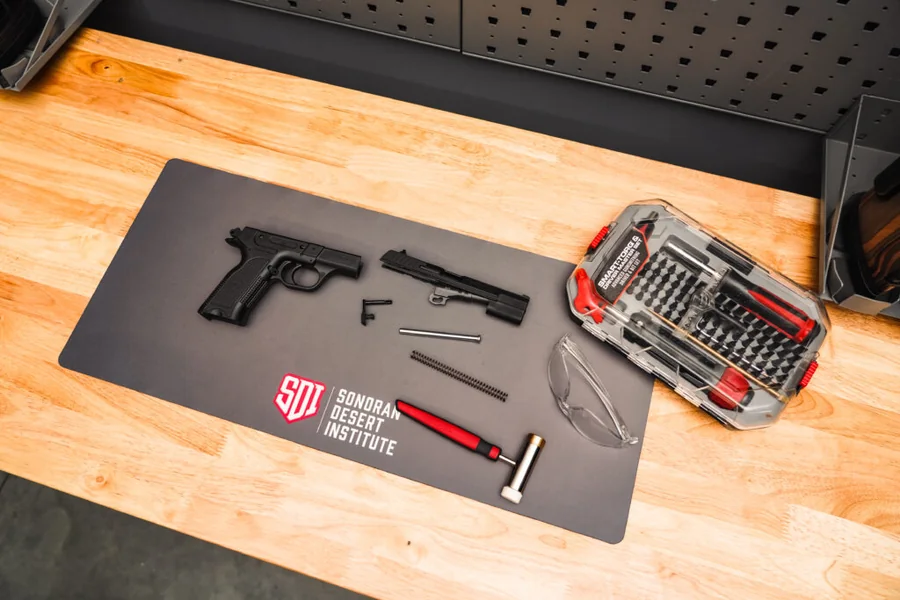
People searching the phrase “Sonoran Desert Institute worth it” are often trying to answer the same question from a practical angle. Students exploring technical education often want to understand how training prepares them for actual work, not just theoretical knowledge. Many prospective learners search for Sonoran Desert Institute reviews because they want to evaluate how strongly a program emphasizes real task execution over passive learning. That is a practical way to assess training value. Sonoran Desert Institute (SDI), which is accredited by the Distance Education Accrediting Commission (DEAC), recognizes that students benefit most when they are actively engaged in doing the work, not just studying concepts. Technical training programs are designed to prioritize hands-on execution so that learners can develop practical, usable skills.
In technical fields, understanding concepts is important, but the ability to apply those concepts defines skill. Training programs focus on real task execution so students can translate knowledge into action. This approach helps bridge the gap between learning and real-world performance.
Moving Beyond Theory into Application
Technical education begins with foundational concepts, then transitions into application through structured assignments. Students learn the principles behind mechanical systems and apply those principles in practical tasks. This reinforces learning through action rather than leaving it abstract.
By engaging in real tasks, students gain a deeper understanding of how systems function. They see how theoretical ideas translate into physical processes and observable outcomes. This connection strengthens comprehension and supports stronger retention. Instead of memorizing concepts, students experience them directly, making learning more meaningful and relevant. It also helps build confidence as students apply their knowledge in practical settings. Over time, this hands-on approach encourages critical thinking and problem-solving skills that extend beyond the classroom. As a result, learners become more adaptable and better prepared for real-world challenges.
Reinforcing Learning Through Hands-On Execution
Hands-on execution reinforces what students learn in coursework. Training programs provide repeated opportunities for learners to perform tasks that reflect real technical work. These assignments allow students to practice skills in a structured and controlled environment.
Each task reinforces specific concepts and builds familiarity with processes. As learners repeat these tasks, they refine their technique and improve accuracy. This repetition supports both skill development and confidence, allowing students to approach work with greater consistency over time.
Developing Practical Skills Through Real Tasks
Real task execution helps students build practical skills that can be applied in technical roles. Training programs design assignments to reflect the types of activities performed in firearms-related environments. This alignment helps students gain experience that reflects real-world work.
By performing actual tasks, students learn how to handle tools, follow procedures, and manage workflows. These skills are difficult to develop through theory alone. Practical experience also helps learners understand how tasks are completed from start to finish, strengthening their readiness for future work.
Strengthening Problem-Solving Through Action
Performing real tasks supports the development of problem-solving skills. When students engage with systems directly, they encounter situations that require observation, analysis, and adjustment. These experiences help learners think through challenges in a structured way.
Instead of relying only on theoretical knowledge, students learn to apply their understanding to real situations. This encourages analytical thinking and helps learners develop the ability to approach problems with clarity. Over time, students become more comfortable in evaluating systems and making informed decisions based on their observations.
Building Confidence Through Experience
Confidence is built through experience, and real task execution provides that experience in a meaningful way. As students complete assignments and observe the results of their work, they gain a clearer understanding of their abilities. This confidence grows with each completed task.
Hands-on execution also reduces hesitation. Students become more comfortable approaching technical work because they have practiced similar tasks during training. This familiarity supports a smoother transition into real work environments where confidence and consistency are important.
Encouraging Active Learning and Engagement
Technical training emphasizes active learning, where students participate directly in the learning process. Real task execution requires focus, attention, and involvement, reinforcing understanding through action. Students are not passive recipients of information but active participants in their education.
This level of engagement supports stronger retention and deeper comprehension. Learners are more likely to remember what they have done compared to what they have only read or heard. Active participation also helps maintain motivation, as students can see the results of their effort in real time.
Supporting Skill Retention Through Practice
Skills developed through real task execution are more likely to be retained over time. When students practice tasks repeatedly, they reinforce both the steps involved and the reasoning behind them. This repetition makes skills easier to recall and apply in future situations.
Training programs that emphasize hands-on work support continued application throughout the learning process. This ongoing engagement strengthens retention and helps learners maintain their abilities beyond the classroom.
Evaluating Programs That Emphasize Real Work
For prospective students reviewing firearms technology training programs, the emphasis on real task execution can provide insight into how effectively the program prepares learners for technical roles. Programs that prioritize hands-on work often help students build stronger and more practical skills.
People who search Sonoran Desert Institute reviews are often asking how much real-world task exposure a program provides, while comparing the balance between theory and hands-on execution, and asking if that experience prepares them for actual responsibilities in technical roles. Training that focuses on execution helps make that connection clear by showing how students engage with real tasks throughout the program.
Building Skills Through Real Task Execution
Technical training focuses on real task execution because it helps students develop skills that are both practical and reliable. By performing tasks repeatedly, learners build familiarity with processes, improve accuracy, and gain confidence in their abilities.
This approach supports not only learning concepts but also applying them in meaningful ways. Through structured assignments and hands-on practice, learners develop the ability to perform technical work with consistency and precision. Technical education becomes more effective when students actively engage in doing the work. By emphasizing real task execution, training programs help learners build the skills needed to approach firearms-related technical roles with clarity, confidence, and consistency.
