

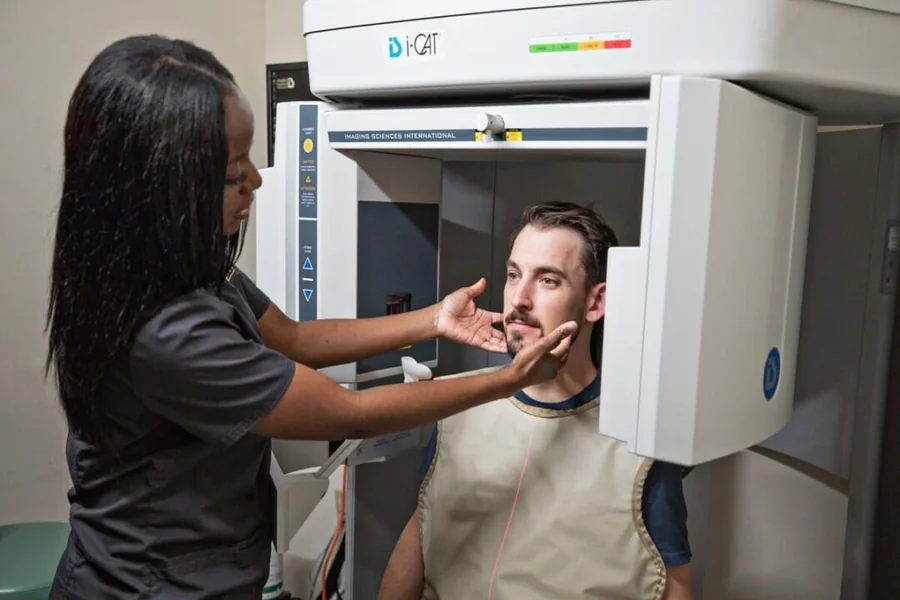
Visiting a dentist can feel overwhelming, especially when it comes to understanding the tools used during comprehensive dental exams. One such tool is Cone-Beam CT. This technology provides detailed 3D images of your teeth, jaw, and surrounding tissue, giving your dentist in Burlington a clear view to plan precise treatments. You might wonder why this matters. Cone-Beam CT offers accurate assessments, leading to better outcomes in restoring your dental health. It is especially useful in detecting issues that traditional X-rays might miss, such as complex root canals or jaw disorders. With Cone-Beam CT, your dental visits become more insightful, ensuring you receive care tailored to your needs. This technology reduces uncertainty and enhances your dentist’s ability to deliver quality care. Understanding its role can reassure you that modern dentistry is equipped to provide thorough and compassionate care, guiding you on your journey to a healthy smile.
How Cone-Beam CT Works
Cone-Beam CT, or CBCT, uses X-ray technology to capture data, which is then reconstructed into a 3D image. Unlike traditional X-rays that provide flat images, CBCT scans offer a complete, three-dimensional view. This comprehensive image helps your dentist identify specific dental issues with greater precision. Instead of relying on guesswork, your dentist can zero in on areas that need attention.
Comparison to Traditional X-Rays
| Feature | Traditional X-Rays | Cone-Beam CT |
|---|---|---|
| Image Type | 2D | 3D |
| Detail Level | Basic | High |
| Radiation Exposure | Low | Moderate |
| Use Cases | Routine Checkups | Complex Diagnoses |
You might notice that while traditional X-rays are useful for routine checkups, CBCT is the go-to for more complex issues. Dentists who use CBCT can better understand conditions like impacted teeth, TMJ disorders, and sinus problems that may affect dental health.
Benefits of Cone-Beam CT
- Accurate Diagnosis: CBCT enhances the ability to diagnose dental conditions accurately. This leads to more effective treatment plans.
- Better Treatment Planning: With 3D images, dentists can plan surgeries or other treatments with high precision. This results in better post-treatment outcomes.
- Patient Comfort: The scanning process is quick and non-invasive, minimizing discomfort.
When Cone-Beam CT is Used
Cone-Beam CT is particularly helpful in several scenarios. If you require dental implants, CBCT aids in assessing bone structure and identifying optimal placement. It is also invaluable in orthodontics for evaluating jaw relationships and planning corrective procedures. Furthermore, when dealing with root canals or other endodontic treatments, CBCT can reveal hidden canals or infections that standard X-rays might miss.
Safety Considerations
Safety is always a priority in dental care. Although CBCT involves moderate radiation exposure, it is generally considered safe for most patients. Dentists assess each case individually to ensure that the benefits of the scan outweigh any risks. For more information on the safety and use of CBCT, you can visit the FDA’s official resource on CBCT.
Looking Ahead
As dental technology continues to evolve, tools like Cone-Beam CT will play an increasingly important role in ensuring effective and personalized care. By offering clearer insights into dental issues, CBCT empowers both dentists and patients to make informed decisions. This promises a future where dental health is managed with greater accuracy and care.
For those considering advanced dental procedures or seeking clarity on a diagnosis, consulting with a dentist who employs CBCT can make a significant difference. Embrace the peace of mind that comes with knowing your dental care leverages the best available technology.
Conclusion
Understanding the role of Cone-Beam CT in dental exams can enhance your experience and outcomes at the dentist’s office. Its capacity to provide detailed images and support accurate diagnoses is unmatched. If you’re visiting a dental care provider, consider asking about how CBCT might benefit your dental care. Trust that your dentist is equipped to offer you the best care possible, guiding you towards a healthier smile.
