

A cloud-based banking system refers to a back-end system associated with the daily processing of banking transactions and posts updates to accounts and financial records. There are four types of cloud computing.
Public clouds: Public cloud is an IT model managed by a third party. The demand for computing services and infrastructure is provided and shared with multiple organizations using the public Internet. It helps anyone to purchase the cloud system. Multiple users share the public cloud.
Hybrid clouds: Hybrid cloud is a computing environment that integrates a premises data center (sometimes known as a private cloud) with a public cloud that allows data and applications for sharing between them. It has a higher level of the control system, which improves the security and protection of sensitive data.
Private clouds: A private cloud is a cloud computing environment where all hardware and software resources are allocated to a single customer. Private cloud combines the elasticity, scalability, and ease of delivering cloud computing services with the access control, security, and resource customization of on-premises infrastructure. Here high technological flexibility and adaptability are configured by management.
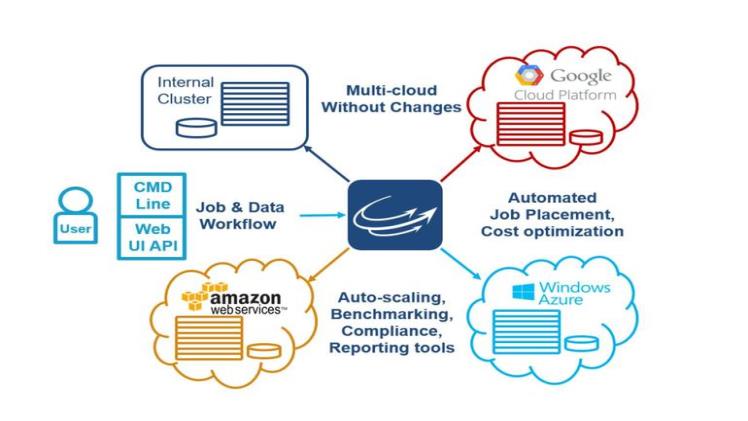
Multi-clouds: Multi-cloud includes more than one cloud service, more than one vendor, or private or public. Multi-cloud situations might exist incidentally or by accident. Multi-cloud is now becoming popular over the company that wants better security and performance through increasing portfolios of environments.
The banking industry of cloud computing technology serves as a reforming digital solution that provides security, agility, and scalability to the banking sector while advancing its capability to handle customer data. The digital cloud-based banking software solutions allow the bank to accomplish resources with the help of data analytics, batch processing, and data storage. Moreover, to improve revenues and operational efficiency, cloud technology helps in the banking sector.
Benefits of cloud computing technology in banking industries
Agility: Cloud service can increase the productivity, skill, and efficiency of the bank industry. It helps redistribute resources and mitigates their IT staff from IT infrastructure, permitting them to focus more on innovative tasks.
Flexibility: The cloud allows the banking industry to quickly adapt to the ever-changing needs of customers and markets. It gives banks more room to fulfill future customer demands, and this flexibility helps banks keep operating in the market.
Scalability: Large mergers and acquisitions are common in the banking and financial industries, so easy integration and scalability are essential. Cloud computing is a cost-effective idea that allows businesses to extend their IT operations according to their demands.
Improve client servicing: Cloud computing helps for faster development of products and services. It helps to boost computing power to meet the accelerating demand of their customers and create personalized services for their clients.
To develop agility, high productivity, better customer experience, effective risk management, faster transformation, and reduced cost are the benefits of Low code on Banking and financial services application development.
Choosing the right model
There are three primary services of cloud computing for corporate banking software as a service
- IaaS: IaaS (Infrastructure as a service) is a cloud service that offers base, network, virtualization, and data storage services through the Internet. The user can rent or gain access to information using an API or dashboard.
- PaaS: PaaS (Platform as a Service) is a shared cloud platform for application development and management that eliminates the need to construct and maintain the infrastructure required for the process. An external server prepares and manages hardware and software applications here.
- SaaS: SaaS (Software as a service) is a subscription-based software delivery strategy that allows consumers to access software applications. It will enable you to view various software packages in a browser without installing everything on your business equipment. The development of the banking and financial services sector’s IT infrastructure has significantly benefited from SaaS solutions.Visit the site: filmy4wep
